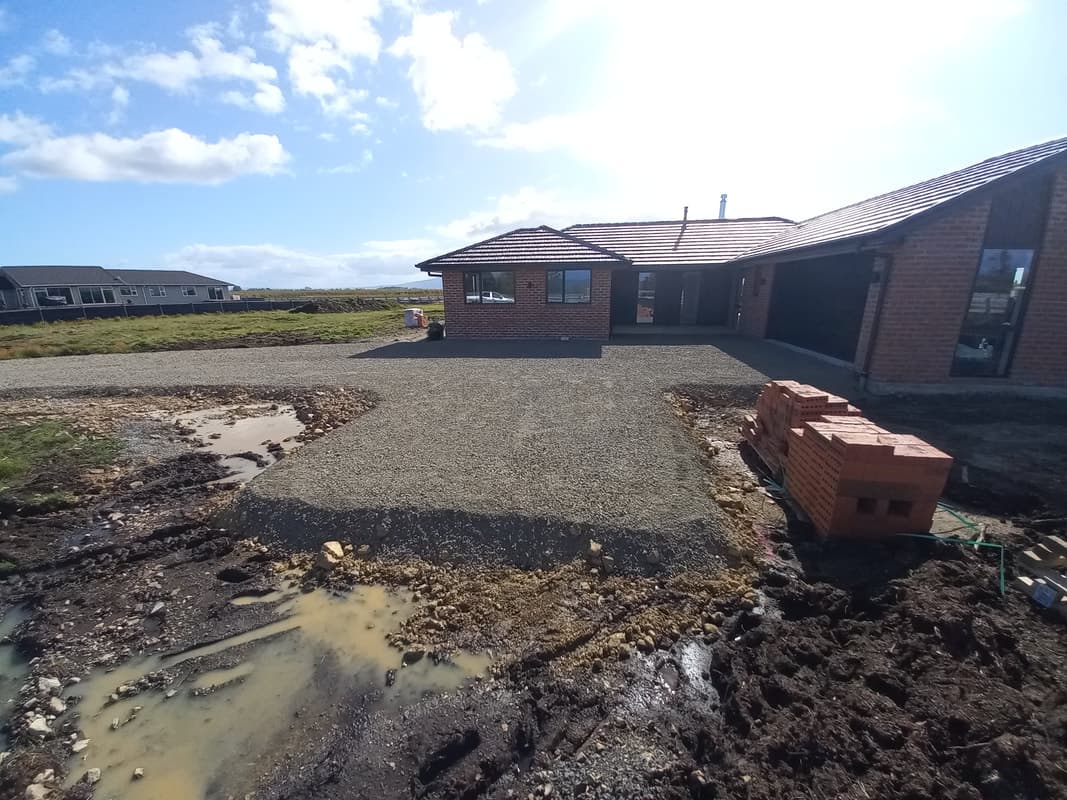
How to fix a muddy driveway
Why it happens - and the fix that lasts
Driveways
Why it happens - and the fix that lasts
A muddy driveway isn't a metal problem, it's a water problem. Tipping another load of gravel on top feels like the fix, but it disappears into the same soft ground by the next winter. Here's why driveways turn to mud, and how it gets fixed properly.
Why it turns to mud
Two things, usually: no proper base, and nowhere for the water to go. Metal laid straight onto soft ground gets pushed into it under weight, and once water sits on the surface instead of draining away, the whole lot churns into mud. Add more gravel and you're feeding the same problem.
The fix that actually holds
The lasting fix is to reshape the driveway so water sheds off it, build a properly compacted base, and put in drainage where the ground needs it. Then the right metal on top has something solid to sit on. It's more than a top-up load, but it's the difference between fixing it once and fighting it every winter.
When to rebuild vs top up
If the base is still sound and the problem is a worn surface, a reshape and resurface will do. If it's mud because there's no base and no drainage, more gravel is money down the drain - it needs reforming. We'll look at it and tell you straight which one it is.
Common questions
How to fix a muddy driveway
Almost always because there's no proper base and the water has nowhere to go. Metal on soft ground gets pushed in, and standing water churns it into mud - so more gravel on top just disappears.
Free quotes & estimates
Let's get itunderway
Tell us about the site and what you want out of it. We'll advise at the design stage and give you a straight answer on cost and timing.
- Call
- 027 319 9414
- Send an enquiry
- Owner
- Brett Holmes